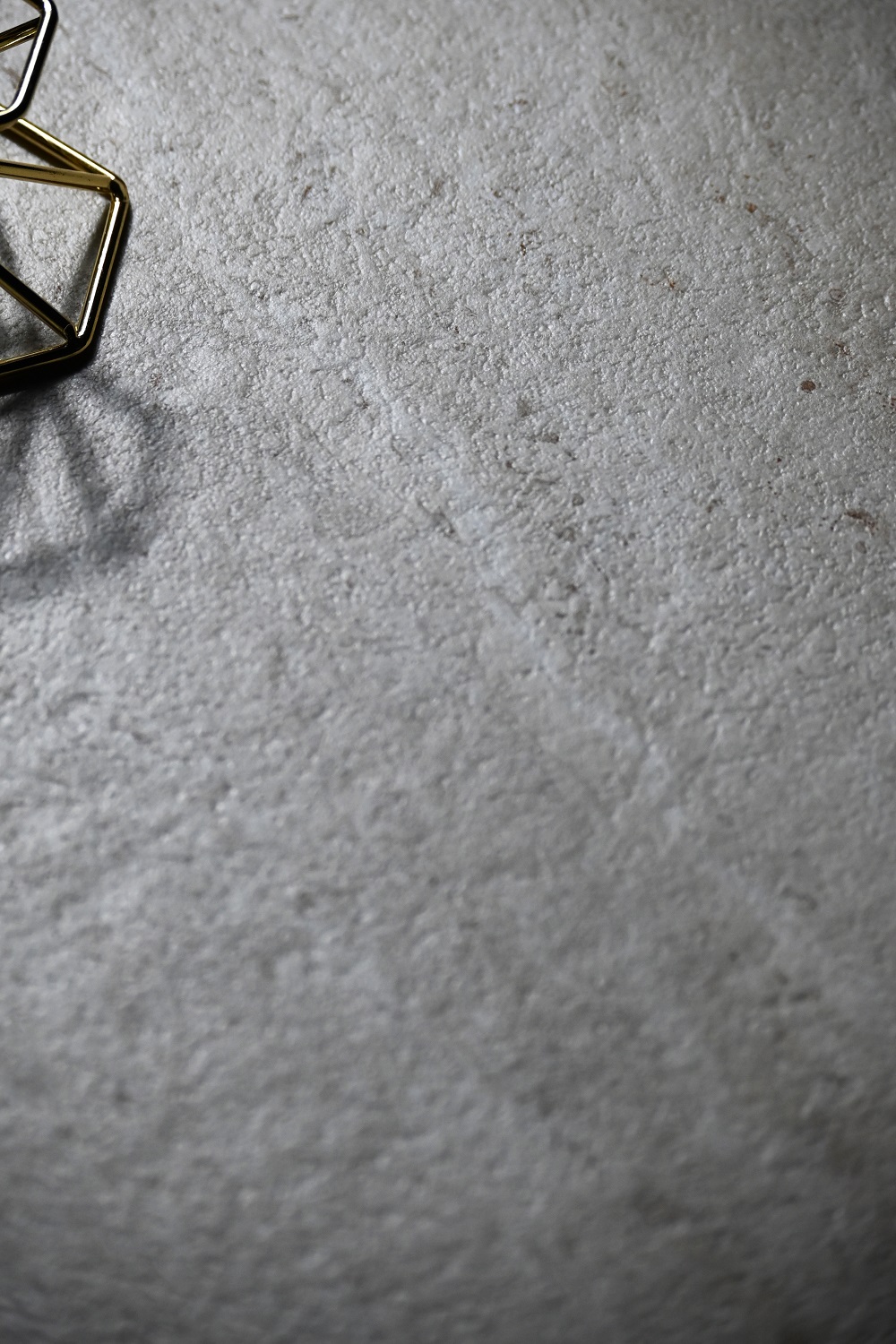
Sintered stone is an innovative, large-format ceramic material crafted from natural raw ingredients through specialized techniques. The production process is exceptionally rigorous, involving pressing under immense pressure exceeding 40,000 tons, combined with advanced manufacturing technology, and high-temperature firing above 1200°C. This extreme process grants the slabs superior physical properties, allowing them to withstand various secondary processing methods such as cutting, drilling, and polishing, thereby providing infinite possibilities for design.
Primarily utilized in the fields of home furnishings and kitchen panels, sintered stone is characterized by its large dimensions, strong plasticity, diverse color options, heat resistance, wear resistance, anti-penetration capabilities, acid and alkali resistance, and zero formaldehyde content. As a material that integrates environmental protection, health, and high performance, it perfectly meets the dual demands of aesthetics and practicality in modern high-end living spaces.
It is crucial to distinguish that ceramic large-format tiles are not equivalent to sintered stone. Although their appearances may be similar, enterprises capable of producing large-format tiles do not necessarily possess the capability to manufacture sintered stone. Compared to ceramic tiles, sintered stone exhibits distinct advantages in material characteristics and functionality, particularly in its ability to undergo drilling, polishing, and convenient cutting. This makes it adaptable to various complex shapes and significantly broadens its range of applications.
A. Extra-Large Format, Ultra-Thin & Lightweight Through advanced engineering, sintered stone achieves an unprecedented combination of massive dimensions and extreme thinness. This results in exceptional physical and mechanical properties, setting a new standard in the construction and design industries.
B. Fireproof & Heat Resistant A defining feature of A1-grade fire-resistant sintered stone is its stability under direct flame. It undergoes no physical changes—no shrinkage, breakage, or discoloration—and emits no gases or odors, making it the ultimate safety choice.
C. Scratch & Abrasion Resistant Forged under extreme heat and pressure, the sintered stone surface achieves a Mohs hardness of 6–7. This durable finish resists scratches from metal objects and is impervious to damage from sparks or sharp tools.
D. High Impact Strength Despite their thin profile, 6mm sintered stone panels offer impact resistance equivalent to 35mm granite. They possess double the strength of traditional ceramic tiles, ensuring durability even in high-traffic areas.
E. Zero Water Absorption & Stain Proof With a near-zero water absorption rate, stains simply cannot penetrate sintered stone. This impermeability prevents bacterial growth and provides a 5-star antibacterial effect. (Note: Belotti Rock Plate specifically holds NSF certification for food-safe surfaces).
F. Extreme Chemical Resistance Unlike traditional materials, sintered stone exceeds standard corrosion testing. It passes not only daily detergent resistance tests but also rigorous heavy-concentration acid and alkali tests (UHA level), earning it the title of the "diamond wolf" in the building materials industry.
G. Non-Toxic & Radiation Free Crafted from pure natural raw materials and fully recyclable, sintered stone is non-toxic and radiation-free. It is certified by GREENGUARD (Gold) and LEED standards, ensuring indoor air quality and sustainability.
H. Versatile Application Leveraging its large size, light weight, thinness, and superior physics, sintered stone is virtually omnipotent. It is suitable for diverse environments—from outdoor walls exposed to the elements, to indoor spaces requiring high hygiene standards (kitchens, bathrooms), and heavy-duty commercial areas.
Characterized by an ultra-large format, ultra-thin profile, and lightweight structure, sintered stone combines these aesthetic advantages with outstanding physical performance. Its comprehensive properties—including A1-level fire resistance, zero water absorption, super scratch resistance, strong impact resistance, UHA high acid and alkali resistance, and food-grade surface safety—make it an indispensable decorative material for modern cabinetry.
It is widely applicable for countertops, cabinet doors, wardrobes, and entry doors. For countertops, 6mm and 12mm thicknesses are primarily used, while 3mm sintered stone is ideal for cabinet doors.
Elevate your bathroom into a sanctuary of quality living with the superior antibacterial properties of sintered stone. This space showcases excellent taste and a refined lifestyle attitude. Naturally antibacterial, deformation-resistant, and corrosion-resistant, sintered stone is internationally recognized for its safety. Backed by DIN 51130 and DIN 51097 anti-slip certifications, it is fearless and invincible in the humid bathroom environment.
Suitable for walls, floors, sinks, and vanity units, sintered stone offers versatile application. Countertops (6mm and 12mm) can feature integrated basins; walls typically use 3mm or 6mm; and cabinet doors are ideally crafted from 3mm sintered stone.
A healthy home requires environmentally friendly furniture. Sintered stone is crafted from natural, eco-friendly materials with an ergonomic structure that is stable and durable. Rounded corner protection prevents daily bumps, while grand and beautiful designs enhance the living space.
Beyond architecture and decoration, its application in furniture brings a distinct aesthetic. Countertops can be directly edged with 12mm stone or feature a hanging edge. For decorative surfacing, 3mm and 6mm thicknesses are mainly used with composite glass, aluminum-plastic panel technology. The chassis can be finished with iron, wood, or stainless steel gold-plating processes.
Sintered stone is a high-density material formed at 1280°C with a forming pressure of up to 40,000 tons, achieving a Mohs hardness of 7. Its scratch and wear resistance are superior, combined with rich, delicate stone textures, ensuring long-lasting durability.
Thanks to its large size and ability to achieve continuous patterns, it is perfect for expansive commercial spaces and large fixtures. The standard specifications include 12mm for countertops, 3mm for cabinet doors, 3mm and 6mm for wall cladding, and 6mm+ for flooring.
For the most frequently used areas in daily life, wear resistance is the primary requirement for flooring. Sintered stone prevents the costly project of repairs or refurbishing due to mottled or imprinted surfaces.
With 5-star stain resistance, it easily withstands daily accidents. Even mischievous children cannot mar the walls, as marks can be easily wiped off. Safety and pollution resistance give children the freedom to explore. Walls are mainly paved with 3mm and 6mm or dry-hung with 12mm; the ground primarily uses sintered stone over 6mm thick.
Exterior wall materials require not only an iconic appearance but, more importantly, resilience against climate change—withstanding wind, precipitation, and sun exposure. Sintered stone will not fade due to UV light or extreme temperatures, nor will it be damaged by low temperatures.
Its excellent physical properties make it an ideal choice for façades. The advantage of large single-panel specifications provides greater creative flexibility compared to traditional materials like marble, granite, or ceramic tiles. Walls use 3mm and 6mm (or 12mm dry-hanging); the ground primarily uses 6mm or thicker.
In duplexes, villas, and lofts, stairs are the link connecting upper and lower floors. An intricately designed staircase acts as a smooth transition, making the spatial flow natural and elegant.
Using sintered stone for stairs creates a cohesive, natural pattern that complements surrounding walls and floors, adding a sophisticated feel. The superior compressive and impact resistance of sintered stone ensures exceptional durability for high-traffic stair applications.